Organometallic chemistry: synthesis and applications of cyclometallated compounds
Cyclometallation reactions, which
allow the activation of C-H, C-C or C-F bonds, are
noteworthy since these bonds present a large energy of
dissociation and therefore a very limited chemical
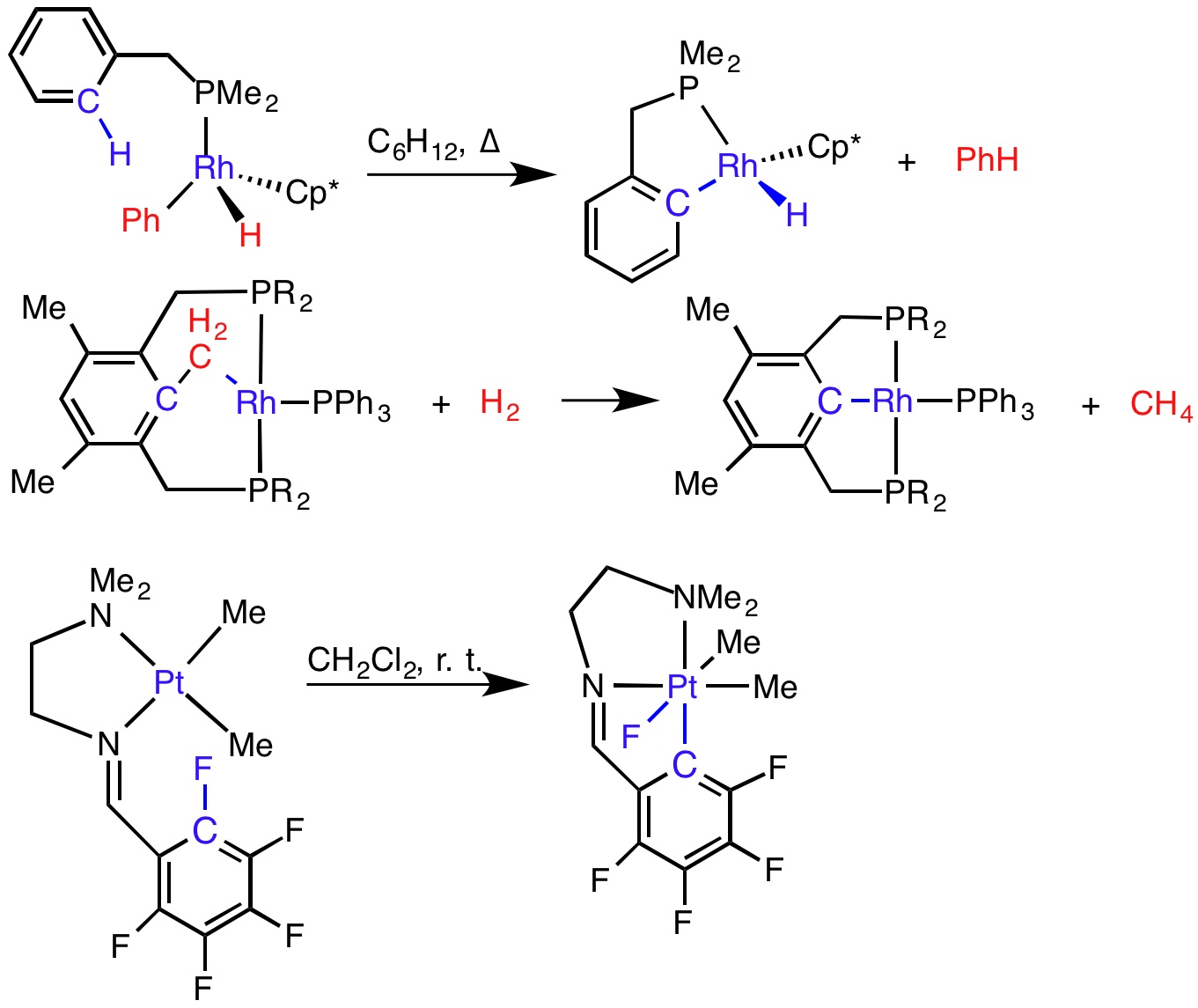
reactivity. Figure 2 shows
examples of C-H, C-C and C-F intramolecular activations. The
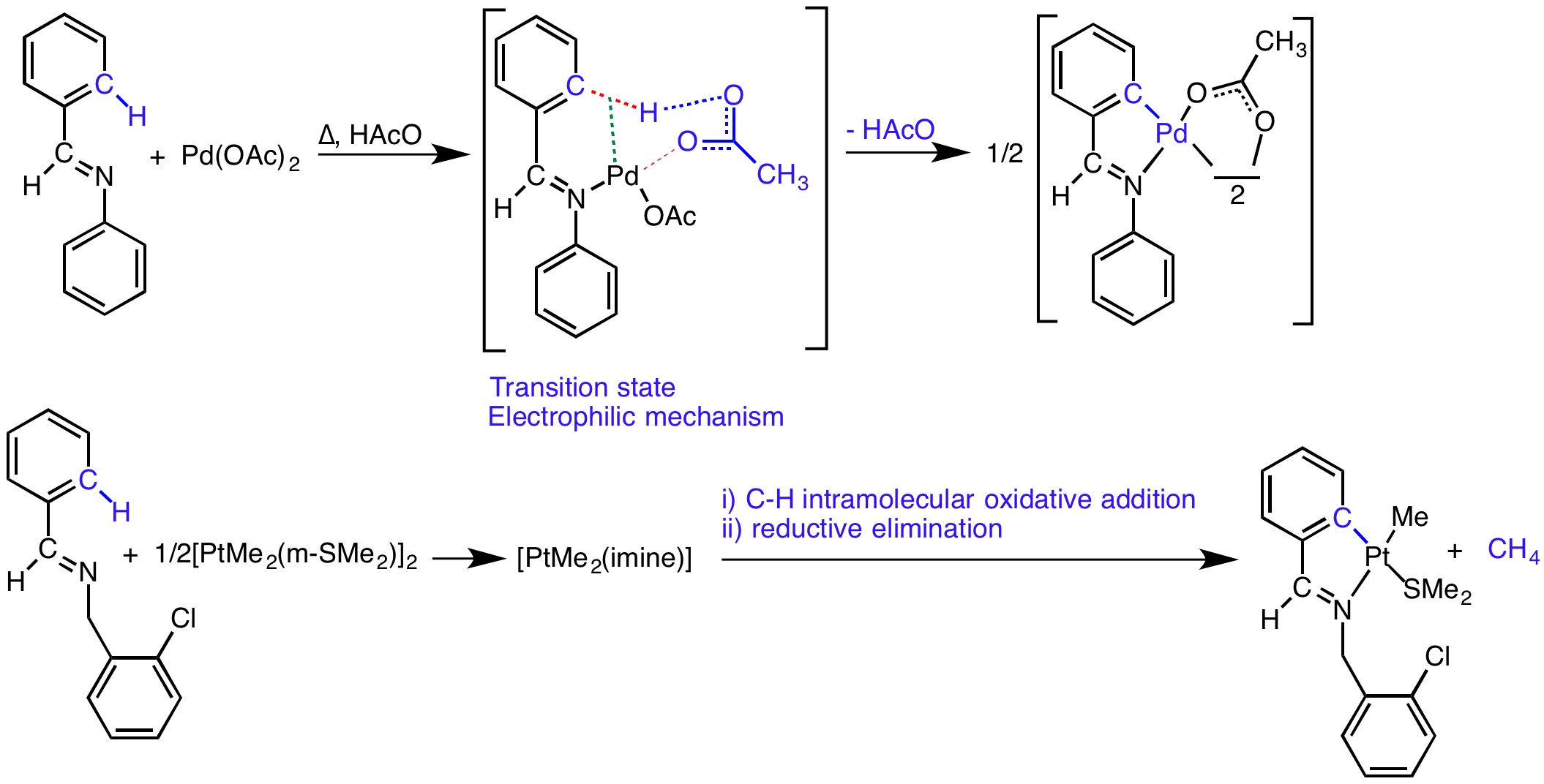
intramolecular C-H activation reactions at Pd(II) and Pt(II)
complexes have been extensively studied. In the case of
Pd(II), the intramolecular C-H activation (cyclopalladation
reaction) takes place by an agostic interaction and
with the help of an internal base, usually an acetato ligand
(Figure 3). This is called "the
electrophilic mechanism". Platinum(II), in function of its
coligands, can activate C-H bonds by the "electrophilic
mechanism" or by an oxidative addition mechanism. Figure 3 gives examples of
cyclo-palladation and -platination reactions, which take
place through the "electrophilic mechanism" or by the
oxidative addition mechanism.
The reactivity of the cyclometallated
compounds of the platinum group metals has been extensively
studied. These compounds have a reach reactivity and can react with Lewis bases (Figure
4), nucleophiles and electrophiles and experience
oxidative addition, insertion and reductive elimination
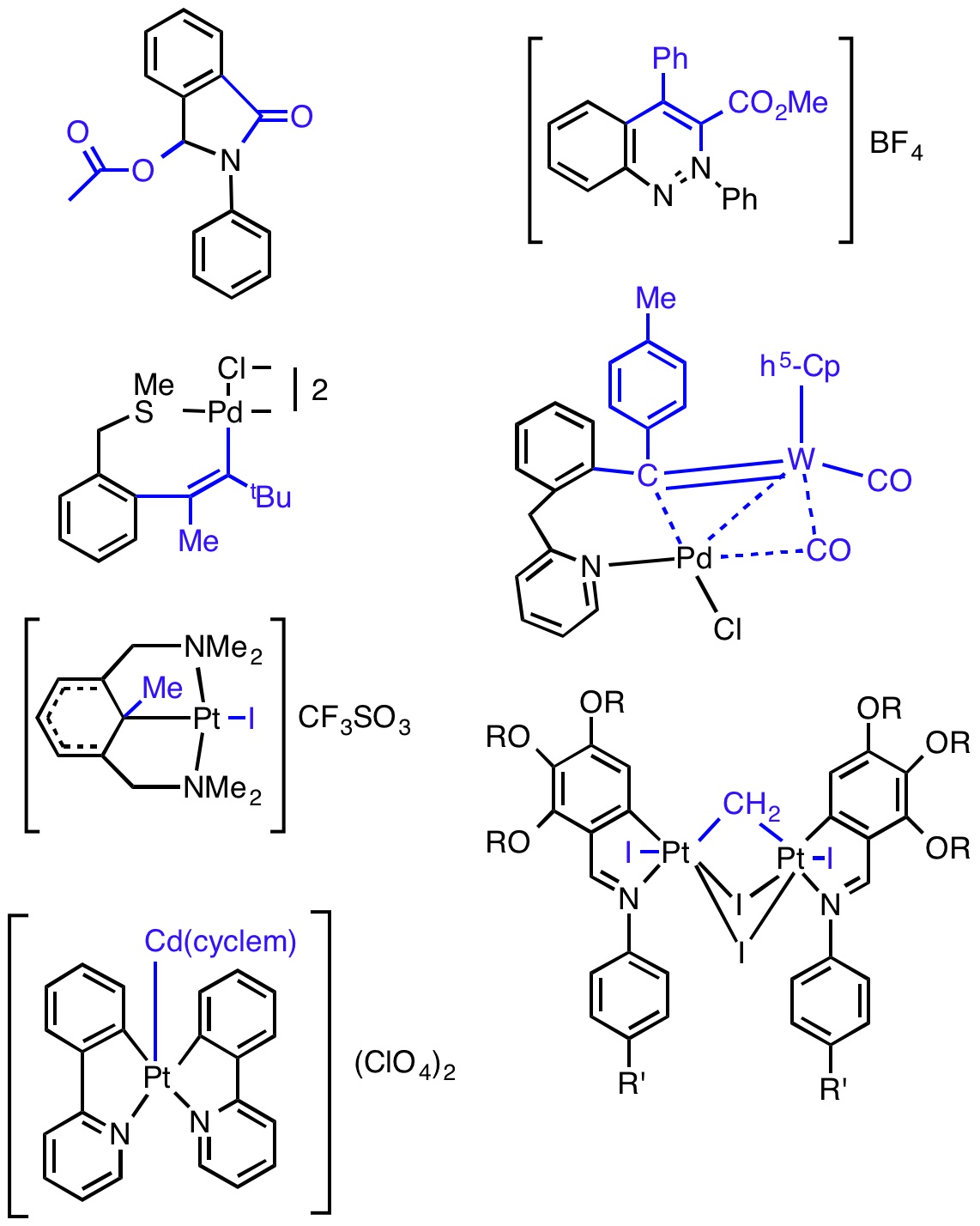
reactions. The reactivity of the sigma metal-carbon bond or
that of the metallic centre of cyclometallated compounds of
the platinum group metals, especially those of Pd(II) and
Pt(II), has allowed the preparation of new organic or
organometallic compounds, such as those shown in Figure 5.
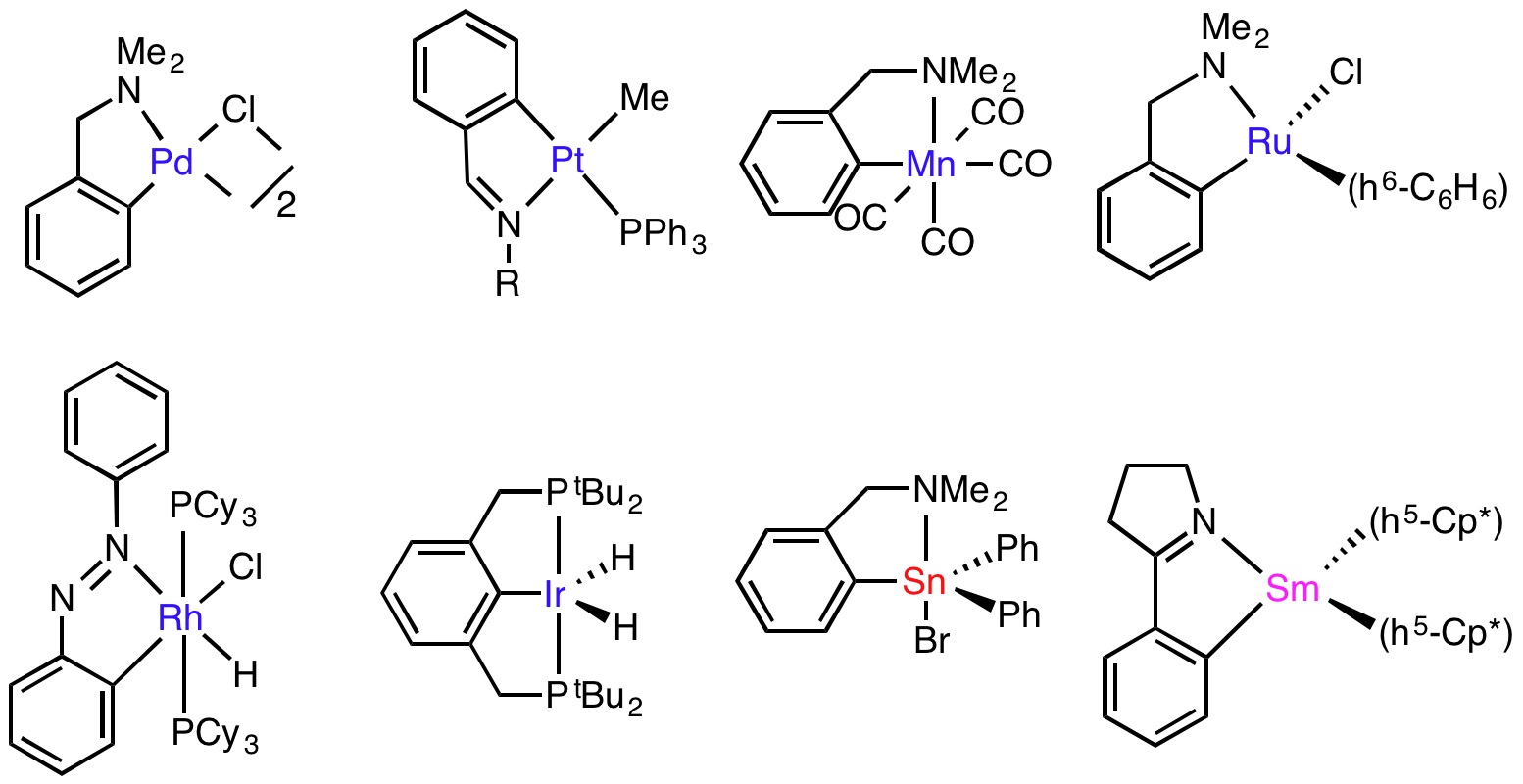 Figura 1
|
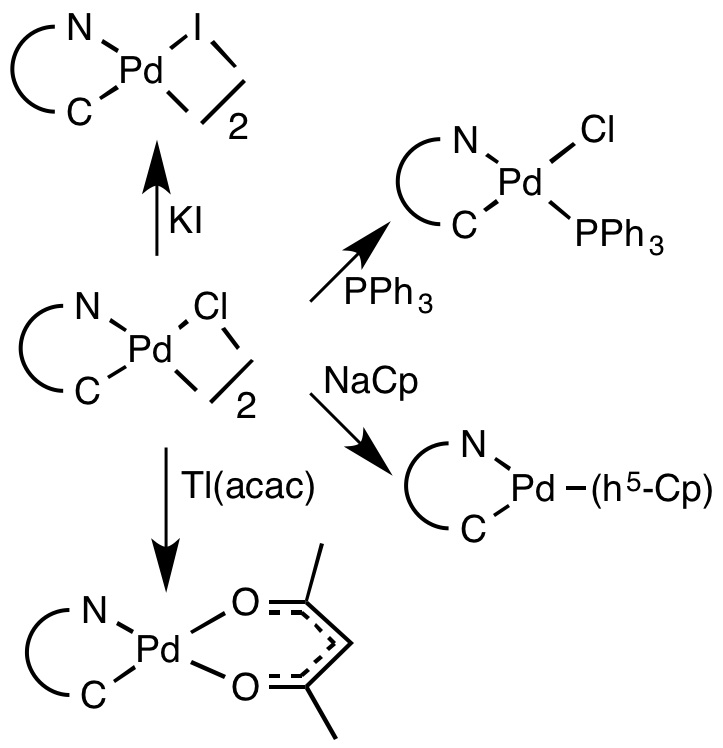 Figura 4
|